

Inclusion and sustainability: Where small producer inclusion and climate action intersect
Practical examples and insights from the Innovations Fund
Several barriers currently exist for small producer inclusion for climate action in supply chains. Companies and other supply chain actors must meet a growing range of climate-focused regulations and targets – from the EU Deforestation Regulation (EUDR) to company-specific emissions reduction commitments. From a small producer perspective, these same evolving regulations can result in a significant burden without any benefits, especially the complex data burden of measuring, reporting and verifying their sustainability actions.
Secondly, there are barriers in scale and access. Businesses may be unaware of how many small producers are in their supply chain, as they often buy from intermediaries further up the chain. As a result, they may not consider working with small producers to be important in meeting their climate targets, or may be unsure of where to begin.
Additionally, many climate-focused approaches in supply chains, such as climate finance and decarbonisation, fail to engage small producers in the design and implementation.
Combined, these barriers show how innovative action is needed to scale up small producer inclusion, embedding livelihood benefits alongside sustainable practices. For companies, these same innovations can facilitate their connections to small producers, making it easier for them to source sustainable products from small producers and maintain climate-relevant information about their products. This can help companies reach climate targets, comply with regulation, reduce their risk of over-dependency on a few larger suppliers, and proactively minimise social risks including human rights abuses and livelihood inequalities.
Sustainability systems, with their existing relations with small producers, their work to stay ahead of evolving regulations, and their commitment to both environmental sustainability and livelihood resilience, are well placed to lead these innovations, as demonstrated in the case studies below.
Monitoring climate change impacts on land where products are sourced from is a critical part of building resilience for supply chains and small producers. Data from monitoring enables supply chain actors to build a picture of changes to a landscape, identify and anticipate threats to biodiversity, and plan corrective or preventative action.
This is important for companies to maintain a dependable source of production and for small producers to maintain stable livelihoods. However, monitoring changes to production sites at scale is extremely challenging. Existing monitoring systems can be costly and resource-intensive and may not sufficiently combine scientific data with the knowledge and experiences of small producers, who are often closely attuned to changes in their local environment. This can limit both the quality and insights generated and the collective ownership of climate adaptation and mitigation efforts.
To address this gap, the Sustainable Fibre Alliance (SFA) worked with Mongolian pastoralists who sell cashmere fibre in global markets. The localised impacts of the global climate crisis are already beginning to affect global supply as well as local livelihoods. Pastoralists cover large areas of rangeland with their goat herds, giving them first-hand knowledge of changes within the landscape.
The innovation focused on building pastoralist participation in climate monitoring, integrating their traditional knowledge with climate science. Through participatory mapping and semi-open questions with 100 pastoralists in Möst soum, Mongolia, the SFA found that pastoralists were already tracking climate-related changes, including the health of their animals and the choice to move grazing pastures. Combining these pastoralist insights with technical data can support the monitoring of these large tracts of rangeland.
The SFA has now identified the next steps to effective monitoring of the localised impacts of climate change, combining traditional knowledge with scientific monitoring. Firstly, there needs to be a systematic approach to integrating and organising the two types of knowledge, which currently can be difficult to bring together. Secondly, pastoralists need training and support to capture and report their suggested indicators (such as animal welfare) frequently and reliably enough to build consistency and comparability in the data set. Thirdly, data for specific indicators (such as choosing to change grazing location) needs to be georeferenced to exact rangeland sites, requiring further technology and training. This is particularly important due to variations in vegetation, ecosystems and weather fronts across the rangeland.
This innovation shows how participatory work can supplement our knowledge of climate changes with small producers bringing important insights into climate monitoring. Approaching monitoring in this way can strengthen climate data sets – generating locally sourced knowledge and data at scale – and establish locally relevant mitigations and solutions. Uniting scientific methods and small producer knowledge can produce the evidence and partnerships needed to elicit changes in national policy and supply chain regulation to support climate and small producer resilience.

Image credit: The Sustainable Fibre Alliance
Resilient supply chains are business critical, and all companies along the supply chain (e.g. local suppliers, international processors, brands) should invest in sustainable and inclusive supply chains to avoid rising costs and lower availability of natural raw materials in the future.
Research shows that when small producers in botanical supply chains take action to grow or harvest their products in ways that support biodiversity, they are more able to adapt to climate changes, and the supply chains they are part of are more resilient. However, many local suppliers lack the resources, guidance or training needed to transition to appropriate biodiversity-friendly practices, which vary across sectors and contexts. The financial transition risk also needs to be mitigated for small producers. Yields may decline in the short term before stabilising and rising, and costs for these improvements are generally not covered by prices paid to the producer. While there are voluntary carbon schemes recognising Nature-based Solutions, smaller producers and pickers from botanical supply chains lack the scale, finance and tools to capture the necessary data and access the voluntary carbon market for additional revenue and recognition of their efforts.
To support small producers in their biodiversity-friendly actions, UEBT: Sourcing with Respect is testing innovative models of additional premium paid to small producers for their actions on the ground. The payments would be made by downstream companies connected to that supply chain. Following consultations with farmer communities, local suppliers and experts in biodiversity, UEBT is designing an approach, where an additional, voluntary payment could be made to producers who take additional biodiversity-positive actions in their small-scale agriculture, agroforestry or wild collection. The funding for farmers would be separated from the traditional purchase price, so payments can come from company sustainability or Environment, Social, and Governance (ESG) budgets rather than procurement, and could also be tied – if desired – to corporate investment in supply chains (insetting) that is connected to nature attributes. This opens up a potential new source of revenue for small producers while supporting company climate or nature goals.
Biodiversity-friendly actions include establishing natural infrastructures; adopting organic practices; improving the quality and availability of surface and ground water; improving cropping patterns; improving soil fertility, structure and drainage; and adhering to sustainable practices in wild collection. Monitoring data is collected with a combination of remote-sensing technologies and targeted field observations on a multi-year cycle, to support credible reporting.
This innovation shows how direct engagement between sustainability systems and small producers can improve resilience for botanical value chains and producers themselves. It responds to the climate, nature and sustainability goals of international customers while benefiting small producers through additional income opportunities.
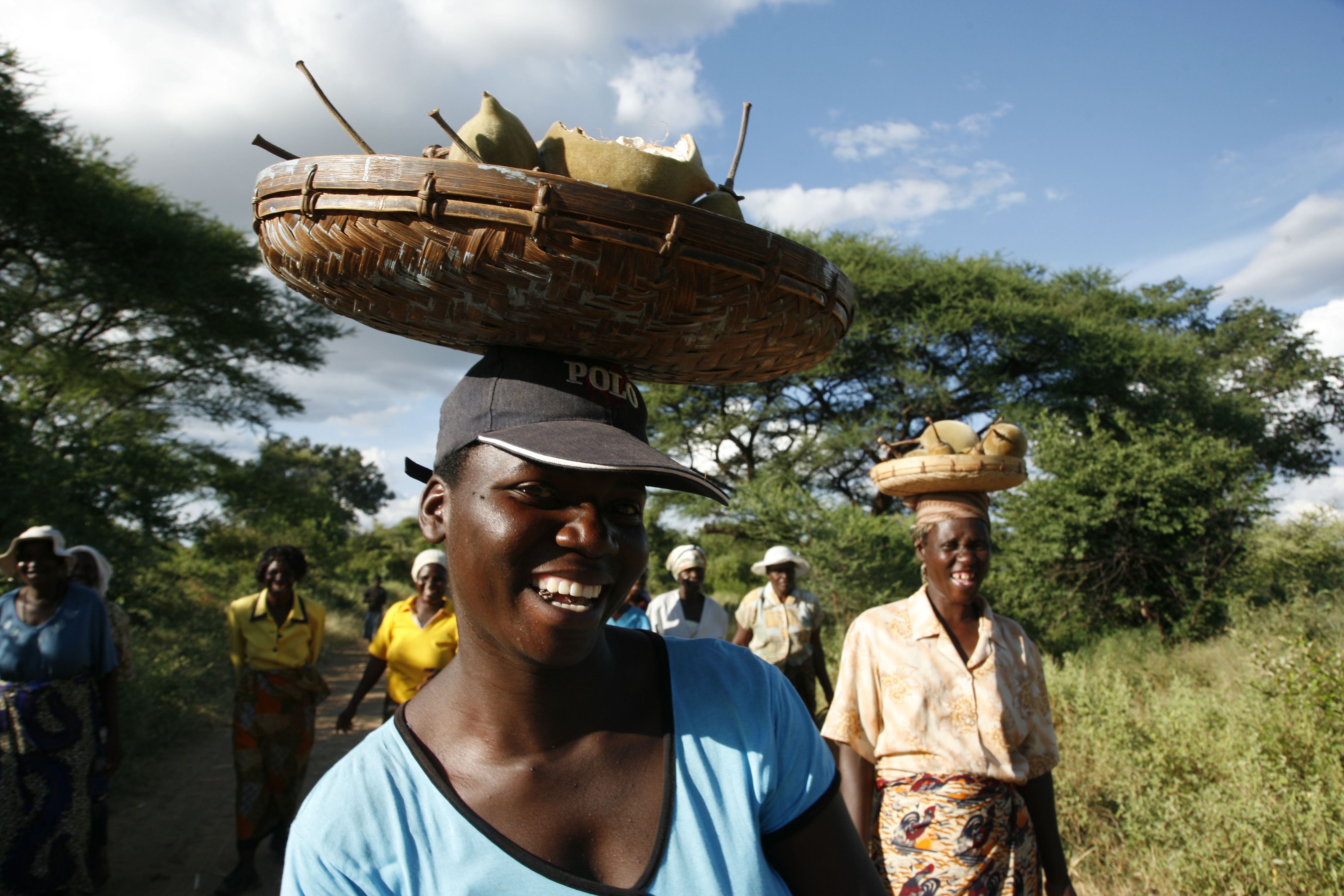
Image credit: UEBT
Companies seeking to accurately report and reduce greenhouse gas emissions within their supply chains increasingly require credible farm-level emissions data. This can be a complex process, and it is difficult for small producers to translate their everyday climate actions into measurable and credible greenhouse gas emissions outcomes.
Companies therefore often source from larger farms with the capacity and scale to generate this emissions-related data, while small producers – despite their potentially climate-positive actions – risk being left out of supply chains linked to corporate climate commitments.
Innovative solutions are particularly needed in the rice sector, with rice growing globally dominated by small producers. To help link small producers and companies through emissions reduction efforts, the Sustainable Rice Platform (SRP) developed a low-carbon assurance module (L-CAM) as an add-on to its existing assurance programme. This module combines farmer-reported field data with remote sensing, climate methodologies and assurance processes to estimate and validate each small producer’s greenhouse gas outcomes in a practical and scalable way. The resulting data is in a format recognised by companies and meeting their reporting needs.
Climate actions for rice farmers are kept practical, achievable and measurable, including improved irrigation practices, reduced burning of rice residues and enhanced nutrient management. However, despite the potential for global measurement, context matters, with baselines and outcomes varying between regions. For example, farmers in northern India were able to achieve greater reductions in their methane emissions compared to farmers in Thailand, but started with a significantly higher methane footprint due to differences in cultivation practice, including flooding regimes and residue management.
To make this innovation successful, SRP highlighted the importance of collaboration across supply chain actors. Internal management systems, suppliers, agronomists, experts in monitoring, reporting and verification, and corporate sustainability teams all play important roles in supporting small producers in their climate actions and ensuring climate data is accurate and meaningful.
“By translating [small producer] efforts into recognised emission reductions, L-CAM strengthens farmers’ position in the market and prepares them for future regulation and climate-linked procurement requirements.”
Sustainable Rice Platform - L-CAM Impact Case Study
This innovation shows how easing the burden in measurement, reporting and verification of climate actions benefits a range of stakeholders across the supply chain. Small producers can access markets seeking verified sustainable, low-carbon products, and companies are better able to meet their climate reporting targets. The result is another layer of climate and livelihood resilience for small producers and sustainable supply chains, through climate action relevant to the sector and regional context.

Image credit: Sustainable Rice Platform
Small producers are responsible for a significant volume of the global supply of cocoa, coffee and bananas – in areas where deforestation continues to happen. Sustainability certification systems and sector traceability regulations play an important role in ensuring global supply chains for these products are not linked to deforested areas.
However, coffee, cocoa or bananas all have their own traceability requirements and schemes, with different traceability identifiers, reporting methods and data-sharing processes.
As part of its innovation around sustainable traceability for empowered producers, Fairtrade International found that both small producers and exporters often need to enter the same data about how and where crops have been grown to meet traceability requirements across national and private systems, and certification schemes. At the same time, information that could provide vital insights for small producers, such as deforestation risk analysis or aggregated market information, does not get shared back with them. In many cases, producers do not know which version of their information is being shared downstream, with whom, or under what conditions.
Despite the lack of harmonisation between traceability systems, Fairtrade International identified opportunities for cross-sector learning. From the coffee sector, the simple and widely recognised International Coffee Organization (ICO) mark aligns with EUDR traceability requirements, making it relevant for company due diligence processes that need to show compliance with this new regulation. Cocoa could potentially learn from coffee in this area, as cocoa bean exports often follow very similar logistics and export handling practices. In bananas, EUDR geolocation traceability requirements do not currently apply, so there are fewer incentives for supply chain actors to gather or report this information. Nonetheless, banana exporters and importers already manage detailed operational traceability information for quality control and logistics purposes.
Based on these insights, Fairtrade International focuses on connecting existing systems through interoperable identifiers and controlled data-sharing mechanisms – all with the aim of easing the data burden and adding value for small producers. The project combines Fairtrace, the Fairtrade International assurance platform, with GeoLink, a consent- and contract-based data-sharing mechanism that enables producer organisations to decide what information is shared, with whom and within which commercial relationship, while also providing transparency and version control over how their information is used across the supply chain. Through Fairtrade’s PlotInsights platform, producer organisations can manage their geolocation information, review sustainability risk information and securely share relevant data with authorised supply chain partners. Rather than creating another standalone traceability system, GeoLink helps connect existing traceability and due diligence systems through interoperable references and secure information exchange. As an immediate result of the pilot, several small producer organisations with digital access and certification support are taking greater ownership of their data – collecting and managing their own geolocation information and reviewing their own sustainability risk information before it is shared downstream.
This innovation shows how interoperability is possible without entire systems change. Improved interoperability boosts small producer inclusion, and supports global supply chains to take climate action, such as preventing deforestation.
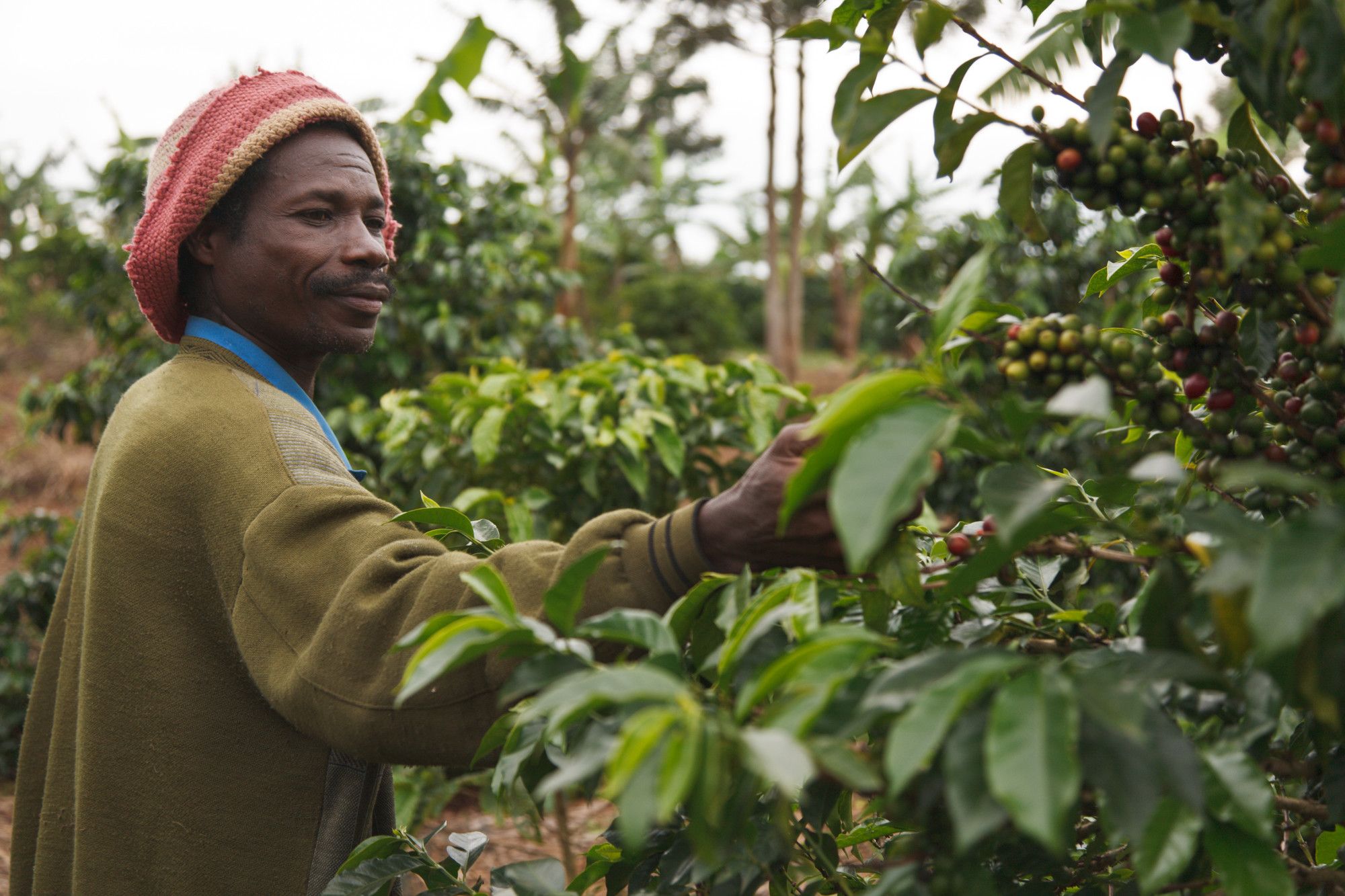
Image credit: Nathalie Bertrams, Fairtrade International
These case studies show that small producer inclusion in global supply chains is critical for climate and supply chain resilience. To further embed climate resilience and small producer inclusion, the following areas are particularly pertinent for innovation and investment:
- Financial sustainability: Different financial models are needed to cover the cost of the transition to more sustainable and climate-resilient production, including how costs can be structured and shared across a supply chain and how small producers who follow sustainable practices can access finance at preferential terms.
- Harmonisation and interoperability: Projects found that, despite calls for harmonisation, different data requirements are still being demanded by different companies and under different regulations.
- Continued strengthening of sustainable production practices: Initial sustainability improvements among small producers need to be continually built on.
- Evaluating the impact of different climate actions on small producer resilience: Further examples and measurement approaches are needed, across diverse contexts and sectors.
- Intersectional inclusion: Engaging with small producers through established groups (e.g. unions) may unintentionally fail to reach more marginalised producers (e.g. women are underrepresented in producer unions in Ghana).
It is important now for companies to invest in inclusive and innovative solutions, as climate resilience is not possible without their involvement. For impact, sustainability systems also need to replicate successful approaches at scale across different sectors.
The ISEAL Innovations Fund supports sustainability systems to drive action on critical sustainability challenges, and operate at scale. The ISEAL Innovations Fund is supported by the Swiss State Secretariat for Economic Affairs SECO and UK International Development from the UK government. Discover further learning resources and updates here.