
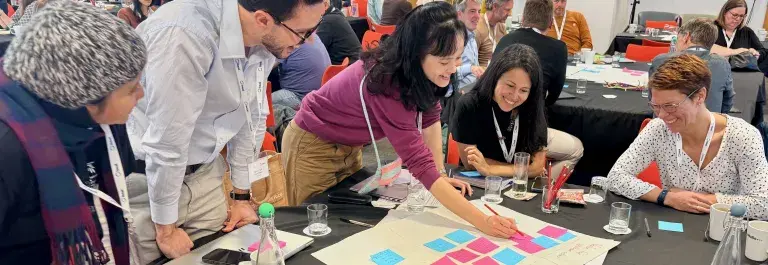
Learning and collaboration at ISEAL Members’ Week
ISEAL members met in Glasgow to share knowledge, exchange ideas and explore ways to strengthen sustainability systems. Their shared aim: sustainability systems that work better together, show stronger outcomes and deliver real value for producers, while keeping pace with rising demand for data, regulatory change and climate and nature pressures.
ISEAL’s member network is, at its core, a learning community, bringing together ambitious sustainability systems to tackle common challenges, learn from experience and explore innovative solutions.
This spirit of learning and collaboration was evident throughout this year’s ISEAL Members’ Week, held in Glasgow over five days in early October. Each day focused on a different topic, giving participants opportunities to explore emerging issues, share practical experience and consider how sustainability systems can respond to a changing landscape.
Several themes emerged consistently throughout the week:
Interoperability is crucial
Interoperability (how well different systems, regulations and frameworks work together) came up repeatedly.
Whether enabling data sharing across supply chains, aligning with regulations and voluntary reporting and disclosure frameworks, or reducing the burden on producers by harmonising definitions and requirements, interoperability will be essential for ISEAL members over the next five years.
Members considered how voluntary sustainability systems can complement emerging climate and nature reporting and disclosure frameworks, strengthen data interoperability, and ensure credible sustainability practices are recognised by policymakers and businesses globally.
Outcome-focused approaches are increasingly important
Demand for sustainability performance data is growing. In response, members are evolving their systems to better monitor and improve performance, supported by new technologies and innovative approaches.
Members exchanged insights on outcome-based standards, performance indicators, digital traceability systems and effective claims management, while emphasising the importance of interoperability and avoiding unnecessary burdens on producers.
Sustainability systems must deliver value across supply chains
While demand for sustainability data grows, members emphasised the importance of ensuring producers and other upstream actors also benefit from the data they provide. Discussions focused on delivering value for these groups, including through strengthening data ownership and equitable use of data.
Sessions on social impact centred on human rights and equity in global supply chains. Members considered the role of sustainability systems in human rights due diligence and shared innovative approaches to addressing complex human rights risks. They also explored how sustainability systems can create greater value for workers, smallholders and communities, and examined practices to strengthen gender outcomes within organisations and across supply chains.
Future-readiness is essential
Sustainability systems must continue adapting to changing expectations, technological advances, geopolitical shifts and pressing sustainability challenges. Members explored the external trends shaping the sustainability landscape and their implications for sustainability systems over the next five years.
As countries such as Brazil, India, and China increasingly move from rule-takers to rule-makers, members also considered the global sustainability regulatory landscape and how it might shift in the years ahead.
The final day focused on navigating change in a rapidly evolving landscape. Discussions explored responsible uses of AI, digital transformation and change management approaches that can help sustainability systems remain effective and future-ready.
Collaboration strengthens impact
As a network of ambitious sustainability systems, ISEAL members recognise the value of shared innovation and collaboration in addressing the challenges and opportunities ahead.
ISEAL Members’ Week is a highlight of our annual membership calendar: a rare opportunity for representatives from a broad range of sustainability systems to meet in person, work on shared challenges and explore innovative solutions.
Thank you to everyone who joined us for these inspiring discussions: 106 participants from 20 countries in Glasgow and 121 online.
We left Glasgow energised and full of ideas for building on these conversations in the coming months.